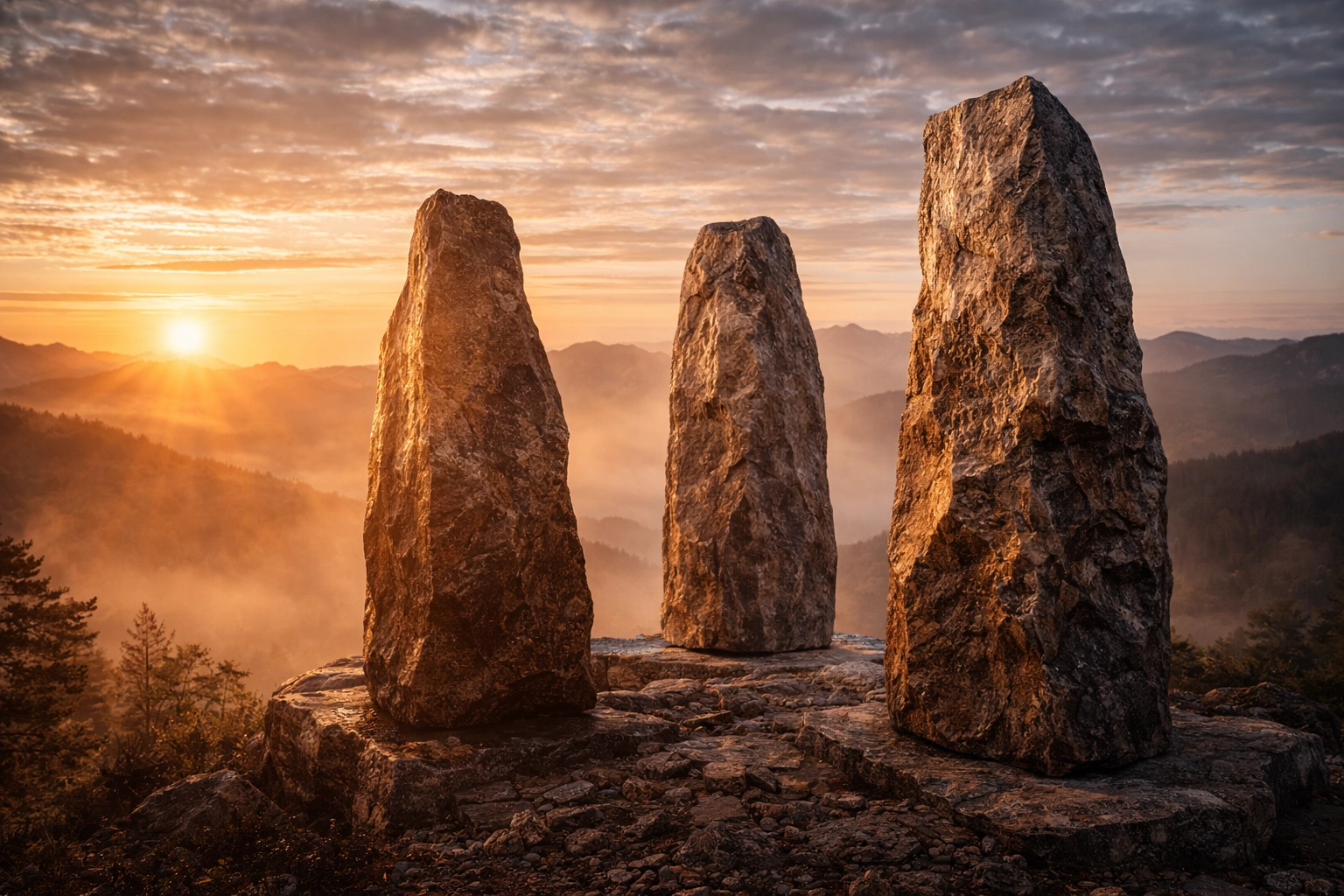
Quartzite sculpture embodies geological density, crystalline structure, and monolithic presence.
As a natural metamorphic stone formed under extreme pressure, quartzite offers exceptional stability, visual depth, and long-term durability — qualities that define serious contemporary stone sculpture.
What Is a Quartzite Sculpture?
A quartzite sculpture is a work carved or shaped from quartzite, a metamorphic rock originating from sandstone transformed through intense pressure and heat over geological time. This transformation fuses quartz grains into a compact crystalline structure, creating a stone of remarkable hardness and cohesion.
Unlike softer sedimentary stones, quartzite retains sharp geometric edges and structural integrity over decades. Its mineral density allows sculptural forms to maintain precision while revealing internal crystalline variations unique to each block.
Geological Formation and Structural Density
Quartzite forms through metamorphism — a process in which sandstone is subjected to tectonic compression and elevated temperatures deep within the Earth's crust. During this transformation, silica recrystallizes, binding grains together into a cohesive mineral mass.
This geological compression results in exceptional density, low porosity, and strong resistance to environmental alteration. In sculptural terms, this means durability, structural stability, and a surface capable of interacting dynamically with light.
The internal crystalline matrix produces subtle tonal variations, giving quartzite sculpture a luminous depth that evolves with natural illumination.
Why Choose Quartzite for Contemporary Sculpture?
Quartzite offers a rare combination of mechanical strength and aesthetic refinement. Its hardness allows precise geometric shaping, while its crystalline composition creates visual complexity without artificial enhancement.
For contemporary stone sculpture, this balance is essential. The material itself becomes an active participant in the artistic process. Each monolith reveals mineral inclusions, tonal gradients, and structural tension shaped by geological history.
Quartzite sculpture therefore represents not merely carved stone, but compressed geological time expressed in sculptural form.
Quartzite vs Marble vs Granite
Marble is appreciated for its softness and workability, yet it remains more susceptible to chemical alteration and surface wear. Granite provides robustness but often presents a more uniform granular texture.
Quartzite combines density, crystalline cohesion, and structural integrity. It offers greater resistance than marble while maintaining a more luminous internal grain than many granites. This makes quartzite particularly suited for monolithic forms where edge precision and surface durability are paramount.
For collectors seeking long-term structural stability and mineral authenticity, quartzite sculpture represents a technically superior alternative.
Quartzite Sculpture and Geological Territories
Certain regions are characterized by notable quartzite formations and mineral landscapes. These geological territories influence the aesthetic and material dialogue within contemporary sculpture.
The interaction between mineral origin and artistic shaping reinforces the authenticity of each piece. Works developed within a geological framework reflect not only artistic intention but territorial mineral identity.
Schauenberg Monolith develops a rigorous approach to quartzite sculpture. Through controlled compression, structural shaping, and surface revelation, mineral mass becomes monolithic geometry — stable, dense, and intentional.
Each sculpture is crafted manually, without mechanical reproduction. The process emphasizes material integrity, geometric clarity, and mineral presence. No two pieces share identical internal configurations, reinforcing the uniqueness of every work.
The result is contemporary mineral art rooted in geological structure rather than decorative surface treatment.