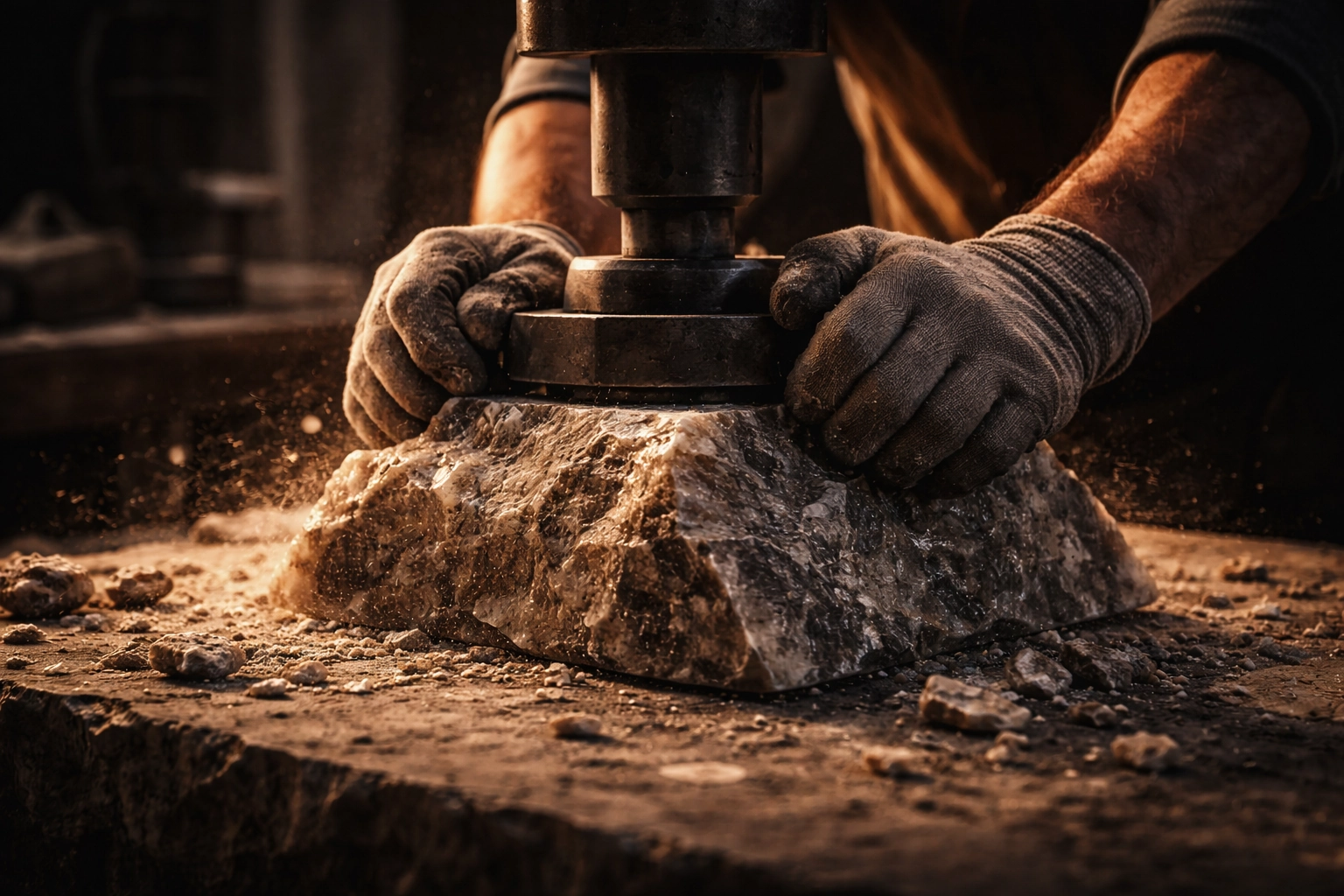
Quartzite sculpting process — cutting and mineral compression in the workshop

Sculptural Compression Process

Each Schauenberg Monolith sculpture is constructed through a layered mineral process designed to preserve geological integrity while shaping a contemporary sculptural form. Quartzite aggregates are placed and compressed progressively, forming a dense internal structure that supports the pyramid geometry.

Mineral Distribution and Structural Balance

This approach emphasizes control over mineral distribution, ensuring balance between density and structural stability. Rather than rapid fabrication, the process allows the material to settle and unify, creating a cohesive monolithic body.

Layered Mineral Construction

Mineral aggregates are introduced in stages to maintain internal consistency. Variations in grain size and mineral composition contribute to the unique surface character of each sculpture. This layered method reinforces the geological authenticity of the finished object.

The structure cures gradually, allowing compression forces to stabilize the mineral matrix. The resulting body expresses both geological density and sculptural intention.

Surface Refinement

Once structural curing is complete, the surface undergoes controlled refinement. Polishing reveals crystalline grain and tonal variation without concealing mineral identity. This stage transforms the compressed body into a tactile sculptural surface.

The refinement process respects natural irregularities. Micro-variations remain visible, reinforcing the mineral authenticity of each monolith.

From Mineral Structure to Sculptural Form

The final sculpture represents a dialogue between geology and geometry. Compression, curing, and surface revelation translate raw mineral aggregates into a contemporary pyramid structure.

Each monolith embodies deliberate material shaping rather than mechanical reproduction — a sculptural artifact grounded in mineral reality.